Discovery and public records laws create different obligations for law enforcement agencies. Understanding redaction requirements, evidence sharing protocols, and chain of custody documentation helps agencies respond correctly and avoid compliance issues.
Here are four common misconceptions about discovery compliance.
Myth #1: “Public Records Requests and Discovery Requests Are the Same Thing”
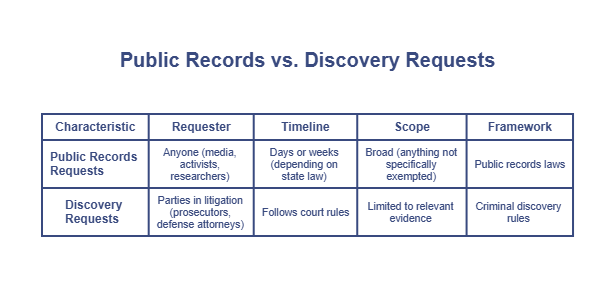
When evidence is requested, many agencies route it through their normal discovery process with the prosecutor’s office. The problem is that public records laws and criminal discovery rules are completely different frameworks with different timelines, scope, and obligations.
Public records requests come from anyone, media, activists, researchers, and must be answered in days or weeks depending on state law. The scope is broad: anything not specifically exempted must be disclosed.
Discovery requests come only from parties in active litigation, prosecutors and defense attorneys, and follow court rules. Scope is limited to evidence relevant to the case at hand.
Using discovery procedures to respond to a public records request violates transparency laws in many states and can trigger penalties, which is why having separate workflows matters. Staff should be able to identify which type of request they’re handling before it gets routed anywhere.
Myth #2: “Redaction Is Optional – It’s Just Extra Work We Do to Be Careful”
Redaction requirements vary significantly by state and the rules are more specific than most people expect.
Arizona law requires redacting victims, minors under 17, nudity, and certain medical information. Failing to redact isn’t just a privacy concern; it’s a statutory violation that can expose the agency to lawsuits. Even in states where redaction isn’t explicitly required by statute, releasing footage that shows victims, witnesses in sensitive situations, or minors can still create significant civil liability.
The agencies that handle this well treat redaction as a standard step in the release process rather than something tackled case by case. Having protocols in place for common scenarios, domestic violence calls, medical incidents, situations involving juveniles, along with the right tools, makes it manageable rather than overwhelming.
Myth #3: “We Have to Provide Evidence in Whatever Format the Attorney Requests”
When a defense attorney asks for footage on DVD or flash drive, it’s easy to assume compliance with that specific format is required, but most discovery rules simply ask for evidence in a “reasonably usable” format, which doesn’t give the requestor authority to dictate the medium.
Agencies can and should provide secure digital links with password protection and download tracking, which are faster, more secure, and better for maintaining chain of custody than physical media. The true cost of thumb drives and CDs adds up faster than most agencies realize, in both time and risk.
Establishing a standard evidence-sharing method and including it in all discovery response letters removes the ambiguity. If an attorney pushes back, agencies have clear documentation showing their method meets requirements while protecting evidence integrity.
Myth #4: “Email and File-Sharing Services Work Fine for Discovery”
Emailing footage or using Dropbox and Google Drive feels like a reasonable shortcut until you look at what it actually creates.
From a security standpoint, there’s no control over who accesses files after initial delivery or how many times they’re copied and forwarded. From a chain of custody standpoint, there’s no automatic audit trail documenting who viewed or downloaded the evidence and when. And from a compliance standpoint, most consumer file-sharing services simply aren’t built for evidence handling and may not meet criminal justice information security requirements.
Purpose-built evidence sharing with secure links, access controls, expiration dates, and automatic activity logging addresses all three. For most agencies, this isn’t about purchasing new software. It’s about using the sharing features already built into the evidence management system they have.
The Common Thread
These four myths create the same downstream problems: wasted time, compliance risks, and frustrated requestors who are waiting longer than they should be.
The agencies that handle discovery well aren’t just faster; they’re operating within a system built for modern evidence management. Organized storage, built-in sharing tools, automated audit trails, and integrated redaction capabilities remove the guesswork from a process that used to rely entirely on institutional knowledge and manual tracking.
Discovery and public records compliance doesn’t have to mean memorizing a different set of rules for every request type. It means having evidence organized, accessible, and shareable through tools that handle the documentation automatically. If you’re newer to the concept, this overview of what a digital evidence management system actually does is a good place to start.