When witnesses and bystanders capture footage on their phones, that evidence can strengthen a case — or get lost, altered, or mishandled before investigators ever see it. The difference often comes down to how clearly your agency communicates the submission process.
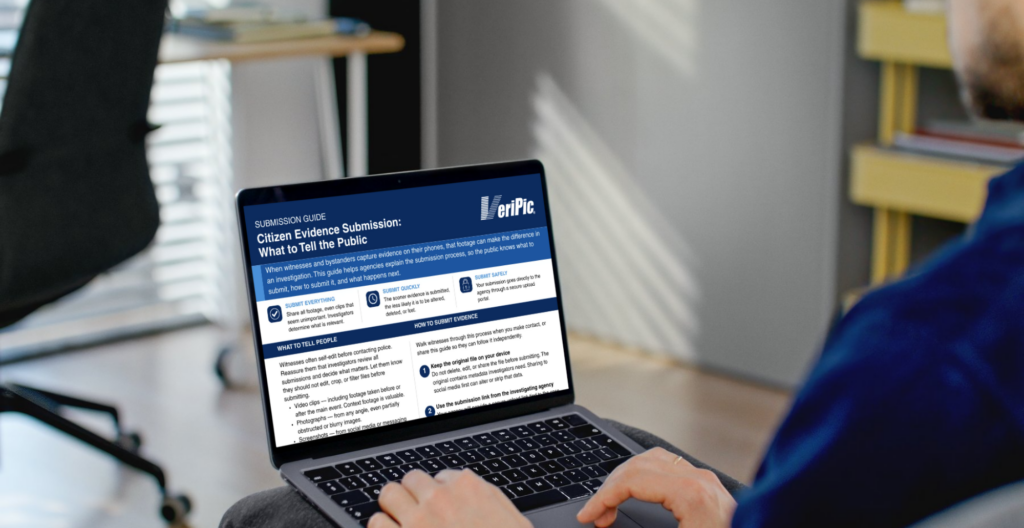
This free one-page guide gives law enforcement agencies a public-ready resource to share with witnesses, victims, and community members. Use it as a handout at the scene, post it on your agency website, or build it into your intake process.
What the Guide Covers
What to submit: Video, photos, audio, and screenshots. The guide explains why witnesses should share everything and let investigators determine relevance, and why files should never be edited before submission.
How to submit it: A five-step process covering original file preservation, secure upload, metadata protection, and upload confirmation.
What happens after: A plain-language explanation of how civilian submissions are received, stored, and handled inside your digital evidence collection workflow.
Why metadata matters: A brief, accessible explanation of why unedited original files protect the evidentiary record, written for a public audience, not a forensics examiner.
Supporting Your Digital Evidence Collection Workflow
A strong digital evidence collection software workflow depends on what happens before footage enters your system. When civilians submit unedited original files through a secure, structured path, the chain of custody starts clean.
This guide reinforces that process on the public side. Agencies using VeriPic’s Witness Upload can point witnesses directly to their secure submission portal. This guide prepares them for that step so files arrive intact, with metadata preserved and chain of custody intact from submission.
Clear instructions at first contact reduce corrupted files, unnecessary follow-up calls, and documentation gaps before evidence ever reaches your case file.
* These fields are required.